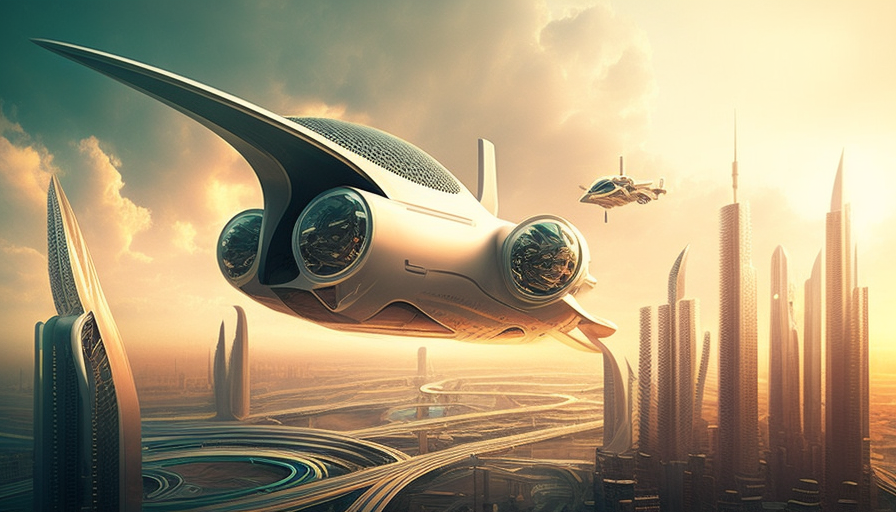
The aviation industry has always been at the forefront of technological innovation, continuously evolving and adapting to meet the demands of the modern world. The future of aviation promises even more exciting advancements, as emerging technologies and trends are set to revolutionize the way we fly. In this article, we’ll explore some of these game-changing innovations that are shaping the future of aviation.
One of the most significant trends in aviation is the shift towards electric and hybrid aircraft, driven by the need to reduce emissions and improve fuel efficiency. Companies like Airbus, Boeing, and many startups are investing heavily in the development of electric and hybrid propulsion systems. These innovations could significantly reduce the environmental impact of aviation and lower operating costs for airlines.
Urban Air Mobility (UAM) refers to the concept of using vertical take-off and landing (VTOL) aircraft for transportation within urban areas. UAM has the potential to revolutionize urban transportation by providing a new mode of travel that bypasses traffic congestion on the ground. Several companies, including Uber, Airbus, and Joby Aviation, are working on developing VTOL aircraft and the necessary infrastructure to support UAM operations.
The Concorde, which offered supersonic commercial flights between 1976 and 2003, was an iconic symbol of aviation innovation. Today, companies like Boom Supersonic and Aerion Supersonic are working on developing new supersonic aircraft that are more fuel-efficient and environmentally friendly than the Concorde. Meanwhile, hypersonic flight, which refers to speeds above Mach 5 (five times the speed of sound), is being explored for potential military and civilian applications.
Artificial Intelligence (AI) and automation are transforming various aspects of aviation, from flight operations to aircraft maintenance. AI-powered systems can help pilots make better decisions during flights, optimize flight paths for fuel efficiency, and assist air traffic controllers in managing increasingly congested airspace. Automation is also being used to improve aircraft maintenance, with the help of drones and robotics for inspections and repairs.
In the cockpit, tools like the Aviator’s Calculator are making pilots’ lives easier by simplifying complex calculations related to flight hours, duty periods, and more. This specialized mobile app, available for iOS and Android, is a must-have for pilots who want to easily and accurately calculate their flight time and other important hours with just a few clicks. Also, now it has free lite version for Android: Aviator’s Calculator Lite.
As air traffic continues to grow, advanced air traffic management systems will play a crucial role in ensuring safe and efficient flight operations. These systems use AI, automation, and data analytics to optimize air traffic flow, minimize delays, and reduce the environmental impact of aviation. The implementation of these systems could lead to more direct flight routes, lower fuel consumption, and reduced emissions.
Drones are quickly becoming an integral part of the aviation industry, with applications ranging from package delivery and aerial photography to aircraft inspections and emergency response. As drone technology advances, we can expect to see more widespread use of drones for various commercial and recreational purposes. Regulatory frameworks are also being developed to safely integrate drones into the airspace.
Sustainable Aviation Fuels (SAFs) are a key component in the aviation industry’s efforts to reduce its carbon footprint. SAFs are produced from renewable sources, such as waste oils, agricultural residues, and other sustainable feedstocks. These fuels can significantly reduce greenhouse gas emissions compared to conventional jet fuel. Many airlines are now investing in SAFs and working to incorporate them into their operations, while governments are developing policies and incentives to encourage their use.
The future of aviation is not only about the aircraft and the technology that powers them, but also about the overall passenger experience. Airlines are constantly striving to improve comfort, convenience, and entertainment for their passengers. Innovations in cabin design, seating, inflight entertainment, and connectivity are all aimed at enhancing the passenger experience, making air travel more enjoyable and efficient.
The commercialization of space travel is another exciting development in the future of aviation. Companies like SpaceX, Blue Origin, and Virgin Galactic are working on launching spacecraft that can carry paying passengers to the edge of space or even into orbit. While space tourism is still in its early stages, it has the potential to become a significant part of the aviation industry in the coming years.
As the aviation industry becomes increasingly reliant on digital systems and connected technologies, cybersecurity has become a critical concern. Protecting the industry’s infrastructure and data from cyber threats is essential to ensure the safety and efficiency of air travel. Efforts to strengthen cybersecurity in aviation include collaboration between airlines, regulators, and technology providers to develop robust security measures and share best practices.
In conclusion, the future of aviation promises to be exciting and transformative, as emerging technologies and trends reshape the industry. From electric and hybrid aircraft to urban air mobility and space tourism, these innovations will not only make air travel more sustainable and efficient, but also open up new possibilities for exploration and adventure. As the aviation industry continues to evolve, tools like the Aviator’s Calculator will remain essential for pilots, helping them navigate the rapidly changing landscape of aviation with ease and accuracy.

Copyright © Gokersoft Kft. All rights reserved.


