
Once upon a time, humans dreamt of creating machines that could think like us, and maybe even outsmart us. Fast forward to the 21st century, and that dream is now a reality. We live in a world where artificial intelligence (AI) has become an integral part of our daily lives. It’s in our smartphones, our homes, and even the way we work. But what is AI, and how does it impact our world?
Artificial intelligence is a branch of computer science that deals with creating machines and software that can perform tasks that would typically require human-like intelligence. In other words, AI enables computers to learn, reason, problem-solve, and adapt to new situations.
Imagine you’re having a conversation with a friend about a recent trip. You discuss the places you visited, the food you ate, and the memories you made. Now, what if you could have a similar conversation with a machine? It might sound like science fiction, but that’s AI in action! It’s the art and science of teaching machines to think and communicate like humans.
The journey of AI began in the 1950s, with pioneers like Alan Turing and John McCarthy leading the charge. Turing, best known for breaking the Enigma code during World War II, introduced the concept of a ‘Universal Machine’ that could simulate any mathematical computation. This laid the groundwork for modern computers.
John McCarthy, on the other hand, is often called the “father of AI.” In 1956, he organized the Dartmouth Conference, where the term “artificial intelligence” was coined. This event marked the birth of AI as a field of study.
Over the decades, AI has experienced several ups and downs, known as AI winters and springs. During the springs, the field made significant progress, and public interest peaked. However, during the winters, funding dwindled, and optimism waned. Despite these setbacks, AI continued to evolve and shape the world we know today.

AI has come a long way since the 1950s, with various types of AI systems now in existence. The three primary categories are:
Narrow AI: This is the most common type of AI today. Narrow AI, also known as weak AI, specializes in one specific task, such as language translation, playing chess, or facial recognition. Examples of narrow AI include Google Translate and Siri, Apple’s voice assistant.
General AI: Also known as strong AI, general AI possesses the ability to understand, learn, and apply knowledge across a wide range of tasks, much like a human. General AI remains a largely theoretical concept, as no AI system has yet achieved this level of intelligence.
Artificial Superintelligence: This type of AI surpasses human intelligence in every possible aspect. It’s capable of self-improvement and has the potential to outsmart its creators. Some experts believe that artificial superintelligence could be both the greatest achievement and the most significant risk in human history.

AI has an incredible range of applications across various industries. Here are a few real-life examples:
Healthcare: AI-powered tools can analyze medical images, identify patterns, and aid in diagnosing diseases more accurately and quickly than human doctors. IBM Watson is a prominent example of AI in healthcare, helping to detect cancer in its early stages.
Transportation: Autonomous vehicles are becoming a reality, thanks to AI. Companies like Tesla and Waymo are using AI to create self-driving cars that can navigate traffic and make decisions based on real-time data.
Finance: AI is transforming the financial sector by streamlining processes and enhancing decision-making. It’s being used for fraud detection, portfolio management, and algorithmic trading. Companies like JPMorgan Chase and Goldman Sachs leverage AI to gain a competitive edge.
Customer Service: Chatbots and virtual assistants powered by AI are revolutionizing customer support. They can handle common queries, route customers to the right support agents, and even predict customers’ needs based on historical data.
Manufacturing: AI-driven automation is making factories more efficient by optimizing production processes and reducing downtime. Companies like General Electric and Siemens use AI to analyze data from sensors and predict when machines require maintenance.
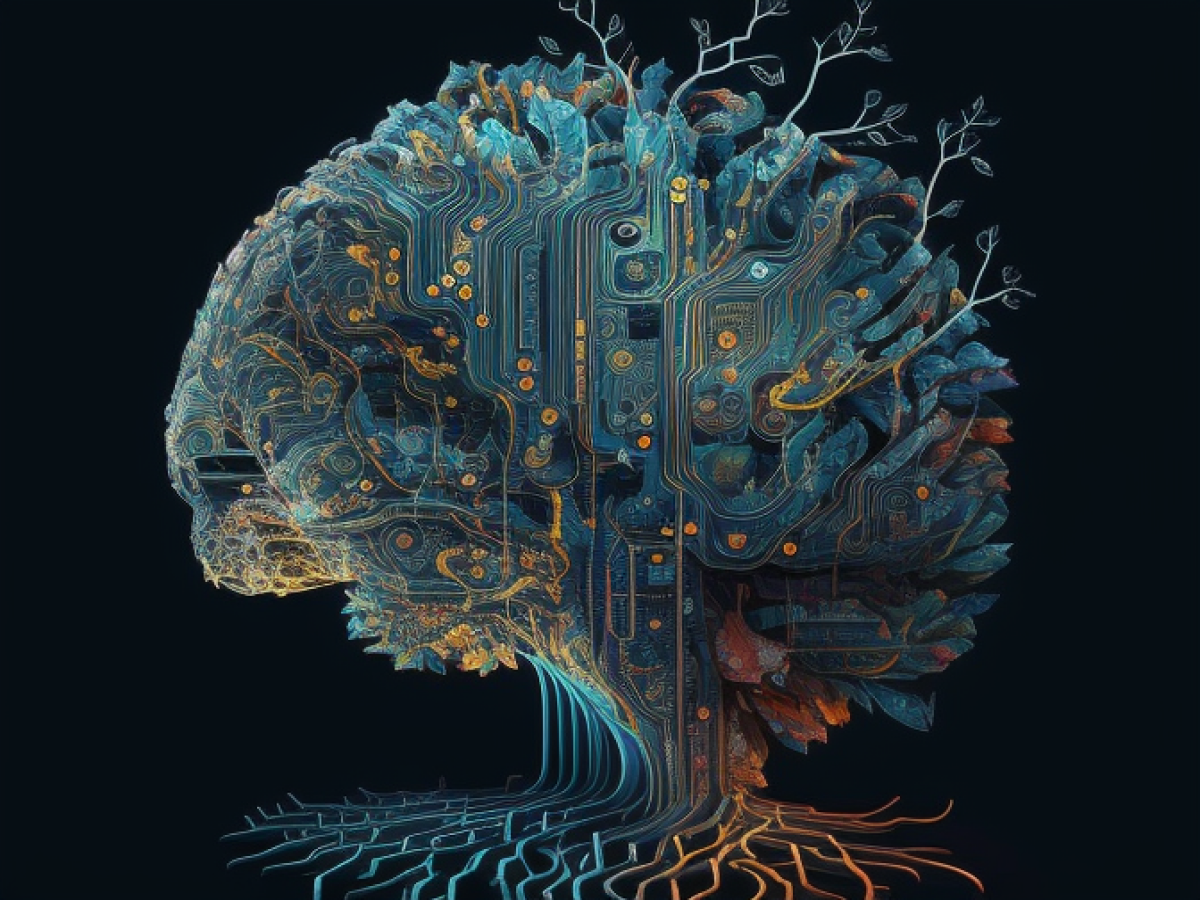
The secret sauce behind AI’s success is its ability to learn and adapt. There are two primary learning methods in AI: supervised learning and unsupervised learning.
Supervised Learning: In this approach, AI systems learn by example. They’re provided with a set of inputs (features) and their corresponding outputs (labels). The AI then maps the relationships between these features and labels to make predictions on new, unseen data. Think of it as a teacher guiding a student through a series of examples and solutions.
Unsupervised Learning: In unsupervised learning, AI systems aren’t provided with labels for their inputs. Instead, they must find patterns, correlations, and groupings within the data on their own. This approach allows AI to identify hidden trends and relationships that might go unnoticed by human analysts.
A significant breakthrough in AI was the development of deep learning, a subset of machine learning. Deep learning utilizes artificial neural networks (ANNs), inspired by the human brain’s structure, to process and analyze vast amounts of data. ANNs have played a crucial role in the success of AI applications, such as image and speech recognition.

AI has undeniably transformed our world, but there are still misconceptions and fears surrounding it. Let’s debunk a few common myths:
AI will replace humans in every job: AI can indeed automate many tasks, but it also creates new job opportunities. AI is most effective when working in tandem with humans, leveraging the strengths of both.
AI is infallible: While AI can process and analyze vast amounts of data quickly, it’s not immune to errors. AI systems can only work with the data they’re given, and if that data is biased or incomplete, the AI’s conclusions can be flawed.
AI has consciousness: AI can mimic human-like thought processes and behaviors, but it’s not sentient. It doesn’t possess emotions, self-awareness, or consciousness like humans do.
As AI continues to advance, it will undoubtedly play an even more significant role in our lives. We can expect to see further integration of AI in industries such as healthcare, education, and entertainment. General AI and artificial superintelligence may still be a distant dream, but their potential impact on society is a topic of much debate.

As AI becomes increasingly integrated into our lives, ethical considerations take center stage. AI systems must be designed to align with human values and societal norms. Here are some key ethical concerns:
Bias and Fairness: AI systems learn from data, and if that data is biased, the AI’s outputs will reflect those biases. Ensuring that AI is trained on diverse and representative data sets is crucial to prevent unfair treatment and discrimination.
Transparency and Explainability: AI’s decision-making process is often described as a “black box,” making it difficult to understand how a particular decision was reached. Promoting transparency and explainability in AI systems is essential to build trust and ensure accountability.
Privacy and Security: AI’s data-driven nature raises concerns about privacy and data protection. Ensuring that AI systems handle personal information securely and responsibly is crucial to protect individuals’ rights and freedoms.
Regulation and Governance: The rapid advancement of AI calls for robust regulation and governance frameworks. Policymakers must work in collaboration with technologists and ethicists to establish guidelines that ensure the ethical development and deployment of AI.
In the grand scheme of things, AI is not here to replace humans but to enhance our capabilities. By collaborating with AI, we can augment our intelligence, unlock new opportunities, and solve complex problems.
For instance, AI can help medical professionals diagnose diseases more accurately, enabling them to focus on delivering personalized care to patients. In education, AI-driven tools can identify students’ strengths and weaknesses, allowing teachers to tailor their instruction to each student’s unique needs.
When humans and AI work together, we can achieve far more than either can do alone. By combining the creativity, empathy, and critical thinking of humans with the computational power and efficiency of AI, we can tackle some of the world’s most pressing challenges.
“What is AI?” is not just a question of understanding the technology but also embracing its potential to reshape our world. From the earliest days of AI research to today’s cutting-edge innovations, the field of artificial intelligence has come a long way, and its journey is far from over.
As we continue to develop and deploy AI in various aspects of our lives, we must remember the importance of collaboration, ethics, and responsibility. By addressing these concerns and nurturing a spirit of cooperation between humans and machines, we can unlock the full potential of AI and usher in a new era of progress, prosperity, and innovation.
So, the next time you ask Siri for directions, use Google Translate to decipher a foreign language, or marvel at the possibilities of self-driving cars, take a moment to appreciate the wonders of AI. It’s an extraordinary technology that’s already transforming our lives, and the best is yet to come.
AI’s potential is awe-inspiring, but it’s crucial to remember that it’s a tool in our hands. It’s up to us to harness AI’s power responsibly and ethically, ensuring that its benefits are enjoyed by everyone.
So, what is AI? It’s a technological marvel that has the power to reshape our world for the better. From humble beginnings in the 1950s to transforming industries today, AI’s journey is nothing short of magical. With a blend of innovation and responsible implementation, the future of AI promises to be even more extraordinary.

Copyright © Gokersoft Kft. All rights reserved.


